
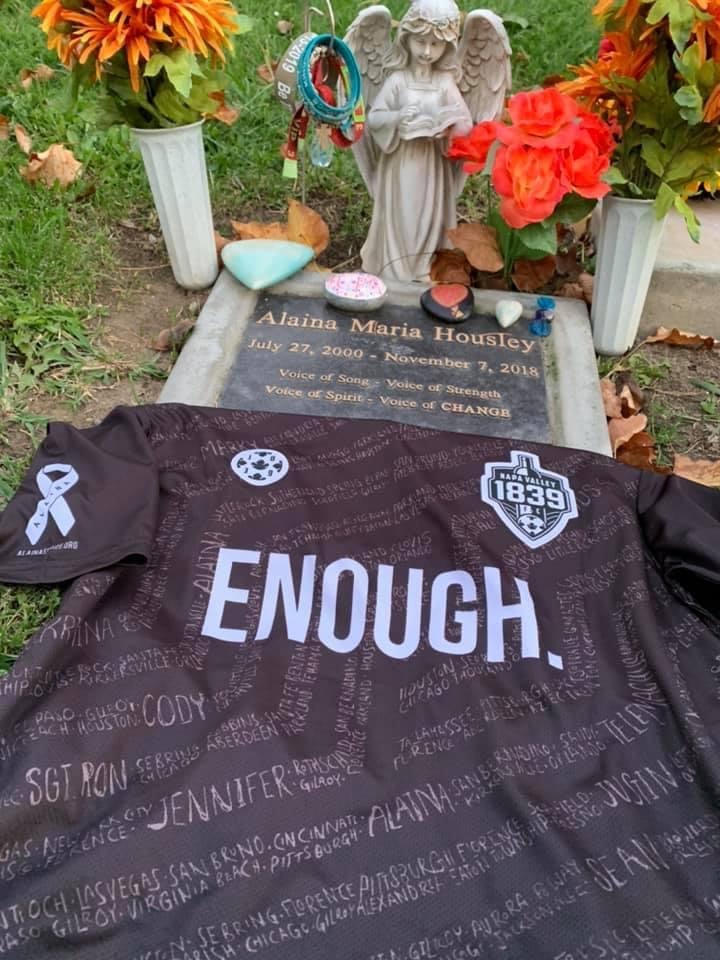
The funeral is over.
The cards have been opened. The flowers have begun to fade. The food deliveries have slowed down. The people who filled the room, answered the phone, and asked, “What do you need?” have returned to their own routines.
Then, suddenly, there is quiet.
This quiet can feel almost louder than the days before it. You can feel isolated and alone, in some ways you are.
After losing my daughter, Alaina, in the 2018 Borderline Bar and Grill shooting, I learned that grief does not follow the schedule other people can see. There is the immediate crisis, the arrangements, the visitors, and the ceremony. There are things to organize and decisions to make. For a while, the activity gives you something to hold on to.
Then the activity stops.
The world seems to move forward, yet the grieving person may still be standing in the same moment, trying to understand what has happened, what has been lost, and how life can possibly continue in a recognizable way.
When the support fades
Many people genuinely want to help someone who is grieving. They bring meals, send messages, attend the funeral, and offer sincere words of support. Those gestures matter deeply. Yet grief often begin a more difficult stage after the first few weeks, precisely when visible support begins to fade.
People may assume you are doing better because the funeral is over. They may worry about “bringing it up” or feel they are intruding. They may return to work, school, family responsibilities, and ordinary conversations.
Meanwhile, the person grieving may be facing the first grocery trip without their loved one, the first weekend with no visitors, or the first morning when there is no immediate task to distract them.
This is their new normal.
It is not a normal anyone chooses. It is a landscape a grieving person has to weather one day at a time.
What a grieving person may need
If you are in this season of grief, please know that you are not behind. There is no correct timeline for mourning, and there is no requirement to appear “better” because other people have gone back to their routines.
Try to lower the expectations you place on yourself. Some days, getting dressed, eating something, or answering one message may be enough. Small acts of care are not insignificant. They are how you keep moving through an experience that cannot be rushed.
You might also consider telling a few trusted people what ongoing support would look like. You do not need to manage everyone’s feelings, yet specific requests can make connection easier. You could ask, “could you check in with me once a week?”. “I would like to talk about Alaina. You do not have to find the right words, yet I would love if people ask me about her.” Any specifics that allow others to help know where you are comfortable or appreciate the interaction.
There may be moments when you need silence and moments when you need company. Both are valid. Grief can change from hour to hour.
A walk, a support group, a faith community, or a conversation with a grief counselor can provide steadiness when family and friends do not know what to say.

How to keep showing up for someone grieving
If someone you love is grieving, do not assume that silence means they no longer need you.
Keep reaching out without demanding a response. A message such as, “Thinking of you today: no need to reply,” can be a gift. So can a regular phone call, a short walk, or sitting together without trying to fill every silence.
Be specific with practical help. Instead of saying, “Let me know if you need anything.” I like to message the friend and ask what their loved one liked. If they answer ravioli or ice cream, my response… “Ice cream is definitely on the menu tonight in honor of ___________(loved one).”
Use the loved one’s name. Share a memory. Understand that remembering someone who died does not deepen the wound; often, it reassures the grieving person that their loved one has not disappeared from everyone else’s world.
Most importantly, resist the urge to fix grief. You cannot remove another person’s pain. You can accompany them through it.

Learning to weather the calm
The calm after the storm is not the end of grief. It is the beginning of learning how to carry it differently.
For me, resilience has not meant pretending the loss did not happen. It has meant choosing to live with tragedy rather than in tragedy. That distinction matters. The loss remains part of my story, yet it does not have to be the only chapter.
Over time, small moments began to matter again: a conversation, a laugh, a sunrise, a memory that brought more gratitude than pain. Those moments did not betray Alaina. They honored the life she lived and reminded me that love can continue even after death.
That is part of what I mean when I speak about valuing each moment. We do not know how many ordinary moments we will have. We do know that presence matters: especially with the people who are still here.
Grief changes the shape of life. It asks us to be patient with ourselves and more intentional with one another.
When the flowers fade and the visitors leave, keep showing up. When the house becomes quiet, take the next small step. And when hope feels far away, remember that hope does not always arrive as certainty or happiness.
Sometimes hope is simply choosing to weather one more day.
Check out my podcasts, contact information and other blogs at arikhousley.com. Or you can get a copy of my bestselling book Always November: Lessons in Loss, Love and Resilience.