
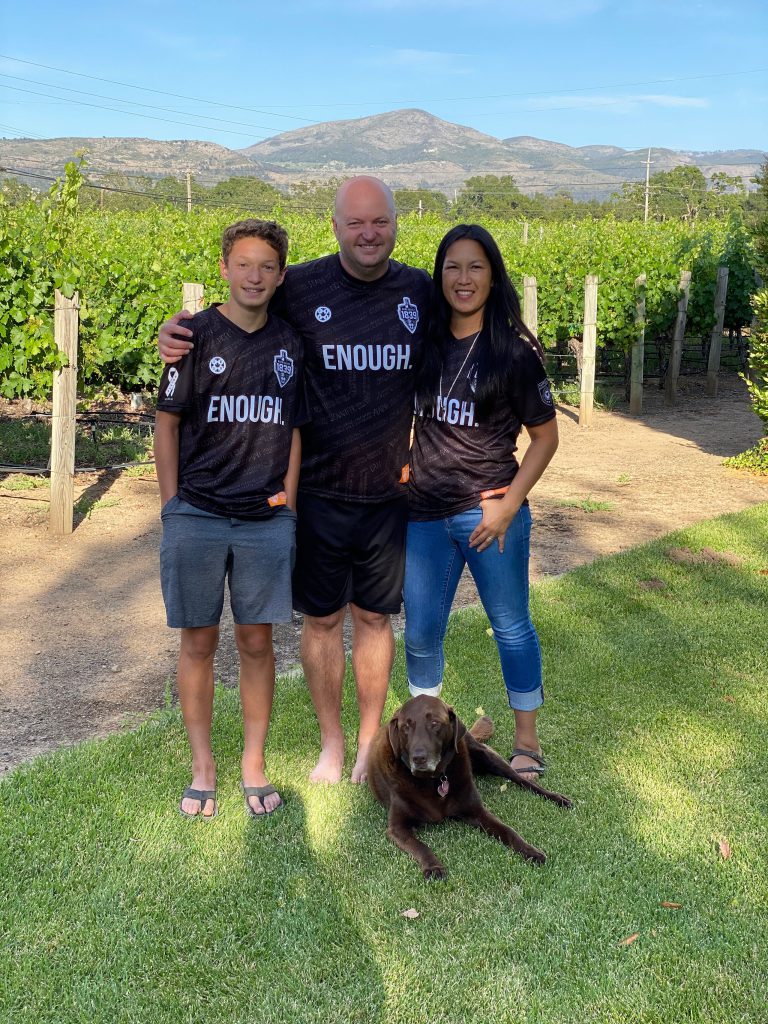
The primary question that I am asked when I am speaking: How do you do this? What helped you get through? My response is always the love of our communities. Whether here in Napa Valley or at Pepperdine University.
When life hits you with the kind of tragedy that leaves you breathless, your first instinct is usually to pull inward. You want to close the curtains, turn off the phone, and try to make sense of the wreckage on your own. There is this internal pressure to “be strong” or to show the world you’re holding it together, yet the truth is that grief isn’t meant to be carried by one person.
I’ve learned through the hardest of times that resilience after loss isn’t about how well you can stand on your own two feet in the dark. It’s about who is standing there with you, holding the flashlight. Letting your community show you love is one of the hardest things you’ll ever do, yet it’s the very thing that helps you find your way back to the light.
The Trap of “I’m Okay”
We live in a culture that prizes independence. We’re taught to handle our business and not be a “burden” to others. When someone asks how you’re doing after a loss, the default answer is usually, “I’m hanging in there,” or “I’m okay.”
Yet, when you’re navigating a grief journey, you aren’t okay. And that’s the point.
Accepting grief support means being honest about that. It means admitting that the weight is too heavy for your shoulders alone. I remember the early days when the fog was so thick I couldn’t even think about what was for dinner, let alone manage a schedule. People want to help, yet we often block them because we don’t want to feel vulnerable. We think we’re being strong by saying “no,” when in reality, the strongest thing you can do is say, “I need you.”
A friend Paul offered to send his companies plane down to pick us up and bring us home after Alaina’s murder and our subsequent evacuation from the Woolsey Fire. I immediately said, “thank you but no.” I felt it was too expensive and couldn’t ask for that. My brother Adam said, “Arik, he knows how much it costs and he’s offering, you’re not asking.”
Seeing my 14 year old son Alex’ eyes light up with the idea of flying on a private jet made me say yes. And YES became our game changer in our grief journey. Accepting the love poured from others, helps in the new part of your story.
Why Practical Love Matters
People often ask how to support someone grieving, and the answer is usually found in the small, “boring” things. It’s the neighbor who mows your lawn without asking. It’s the friend who drops off a bag of groceries because they know you haven’t been to the store. It’s the text that says, “I’m thinking of you,” with no expectation of a reply.
These acts of service aren’t just about getting chores done. They are physical manifestations of love. When you let someone bring you a meal, you’re letting them carry a tiny piece of your burden. You’re giving them the opportunity to show up for you. For the person grieving, it creates a small pocket of space where they don’t have to “do” anything. They can just exist.
If you’re the one grieving, try to stop seeing help as a sign of weakness. See it as an investment in your survival. You need your energy for the emotional work of healing; let the community handle the logistics.
Finding Hope After Tragedy Through Connection
One of the most beautiful parts of community is the shared validation. When you are surrounded by people who love you, your loss is acknowledged. It isn’t swept under the rug. You realize that while your specific pain is yours alone, the act of grieving is a human experience we all share.
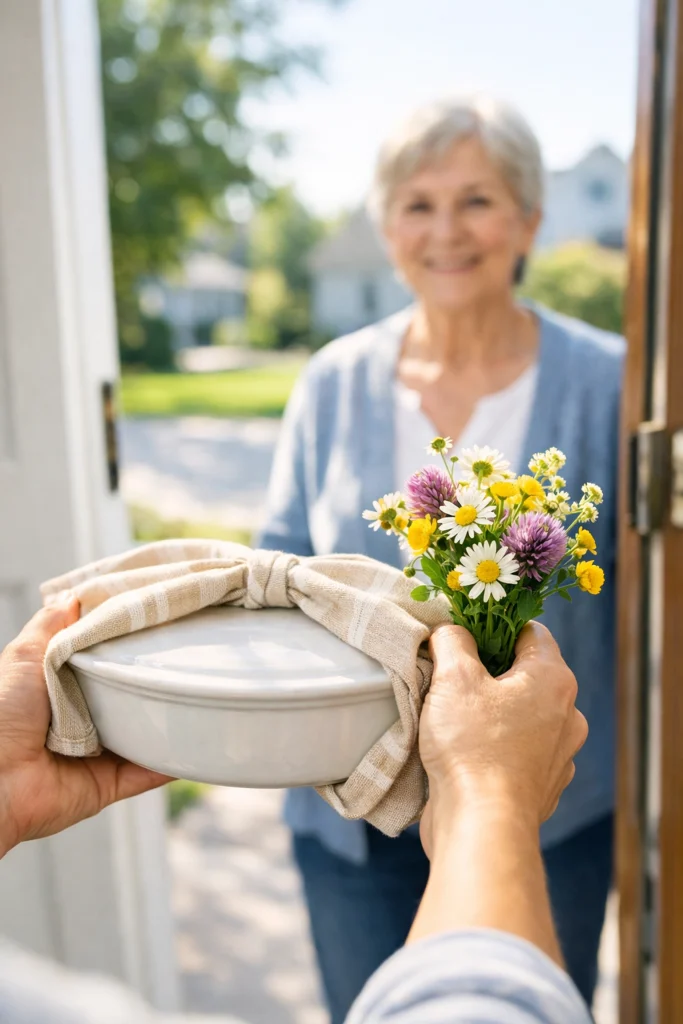
Finding hope after tragedy doesn’t happen in a vacuum. It happens in the conversations on the porch, the shared tears over a photo, and the moments where you realize you are still part of something bigger than your pain. Community reminds you that there is still a world moving around you, and eventually, they will help pull you back into it.
Resilience is a Team Sport
We talk a lot about resilience after loss, yet we rarely talk about the fact that resilience is built through connection. None of us are built to withstand the storms of life in isolation. Your community is your anchor. They are the ones who remind you of who you were before the loss and who you can still become.
When you allow others to show you love, you are teaching yourself that you are worthy of care even when you feel broken. That realization is a massive step toward healing. It allows you to value each moment you have with the people who are still here, standing in the gap for you.

A Note to the Community
If you are reading this because you want to know how to support someone grieving, my best advice is this: just show up. Don’t wait for them to ask, because they probably won’t. They don’t have the bandwidth to delegate tasks. Just do something. Send the card, leave the coffee on the porch, or sit in silence with them for twenty minutes. Asking them what they need is too vague. Please don’t take it personal if they don’t want the food as they have too much in the fridge already. They will still see you showed up.
Your presence is the most powerful grief support you can offer.
Moving Forward Together
Grief changes you. It changes the way you see the world and the way you see your relationships. It’s a long, winding road, yet it doesn’t have to be a lonely one.
If you’re in the thick of it right now, I want to encourage you to let the people in. Let them see the mess. Let them bring the casserole. Let them hold your hand when the words won’t come. It’s in that shared vulnerability that we find the strength to keep going.
Life is fragile, and we have to value each moment. Part of valuing those moments is recognizing the beauty of the people who refuse to let us walk through the fire alone.
We’re all in this together. Check out my podcasts, contact information and other blogs at arikhousley.com. Or you can get a copy of my bestselling book Always November: Lessons in Loss, Love and Resilience.