
After losing someone (in my case, my daughter Alaina) there are moments that resonate where you can feel joy, sorrow, and presence all at once. They don’t ask permission. They just arrive. Sometimes they show up in the quiet, like when a song comes on in the car and takes you somewhere you weren’t planning to go. Sometimes they arrive in major life moments, when the heart somehow holds gratitude and heartbreak in the same breath.
Alaina was a victim of the mass shooting in November 2018 at Borderline Bar and Grill in Thousand Oaks, California. It was a place that had been ironically deemed the “Safest City in America.” There are no words that fully make sense of that kind of loss. There is the phone call, the disbelief, the blur, the silence that follows, and then the long road of learning how to keep breathing when your world has split in two. People often ask how you move forward after something like that. The truth is, you do move forward, yet you never move on. You carry them with you. You learn, slowly and imperfectly, how to live with tragedy instead of living in it.
Since her passing, we have watched our son reach milestones like turning 19 and graduating college. We’ve watched holidays come and go, birthdays arrive with both celebration and ache, and ordinary Tuesdays turn sacred because grief has a way of making you pay attention to what matters. We’ve also watched Alaina’s friends graduate and celebrate, yet she wasn’t with us in body. Every milestone has had that strange duality to it. We cheer, we smile, we hug, and somewhere underneath it all is the awareness that someone we love deeply should be here too.
Recently, eight years after that tragic day, her best friend Maria got married. To say Maria and Alaina were close doesn’t quite cover it. They were inseparable, “best-friend-soulmates,” the kind of friends who could turn the most average day into something memorable. The kind who knew each other’s expressions before a word was spoken. The kind who could be laughing one minute, crying the next, and then laughing again because that is what deep friendship often looks like when it is real and unguarded.
Maria was not just one of Alaina’s friends. She was family in the way chosen family becomes part of your life. She knew Alaina’s heart. She knew her humor, her energy, her loyalty, and the way she could light up a room without even trying. Alaina had that rare gift of making people feel seen. She loved big. She showed up fully. And Maria was one of the people who knew that best. So when Maria got engaged to Jack and the wedding plans began taking shape, I already knew this would not just be a beautiful celebration. It would also be a profound reminder of all that has been lost and all that still remains.
I was so happy for Maria and Jack, yet I felt the weight of knowing I will never walk Alaina down the aisle or hear her say “I do.” That reality doesn’t soften because time passes. If anything, certain moments sharpen it. Weddings do that. They are full of hope, promise, family, dancing, laughter, and future. They shine a bright light on what is present, and sometimes that same light reveals what is absent. I knew the experience would be an emotional rollercoaster. What I didn’t fully know was how deeply it would also remind me that love still keeps showing up, even in the middle of grief.
When Maria’s family invited us to Portugal for the wedding, my wife Hannah and I didn’t hesitate. Some invitations are more than invitations. They are sacred opportunities to show up for people you love. This one felt that way from the very beginning. We made the trek from Napa Valley to Lisbon, and even the travel itself felt like part pilgrimage, part celebration.
Long flights have a way of giving you too much time to think. Somewhere between airports, layovers, plastic cups of water, and trying to sleep while sitting mostly upright, my mind kept drifting back to Alaina. I thought about how much she would have loved an overseas wedding. She had that youthful energy that could make an adventure out of delayed luggage or bad coffee. I could almost hear her making some sarcastic comment about airplane food and then immediately turning it into a joke everyone else would repeat the rest of the trip. Grief does that. It slips into the empty seat beside you and travels with you, quiet yet unmistakably present.
When we arrived in Lisbon, the city greeted us with warm light, hills, tiled buildings, and that beautiful mix of old-world charm and lived-in life. The cobblestone streets seemed to glow in the sun. Laundry hung from balconies. Church bells carried through the air. We wandered past little cafés and sat for meals that invited you to slow down. Fresh bread. Olive oil. Seafood. Pastries that felt like a reward for simply being awake. We saw spectacular places and shared amazing meals, and for stretches of time, we were able to simply be there, taking it all in.
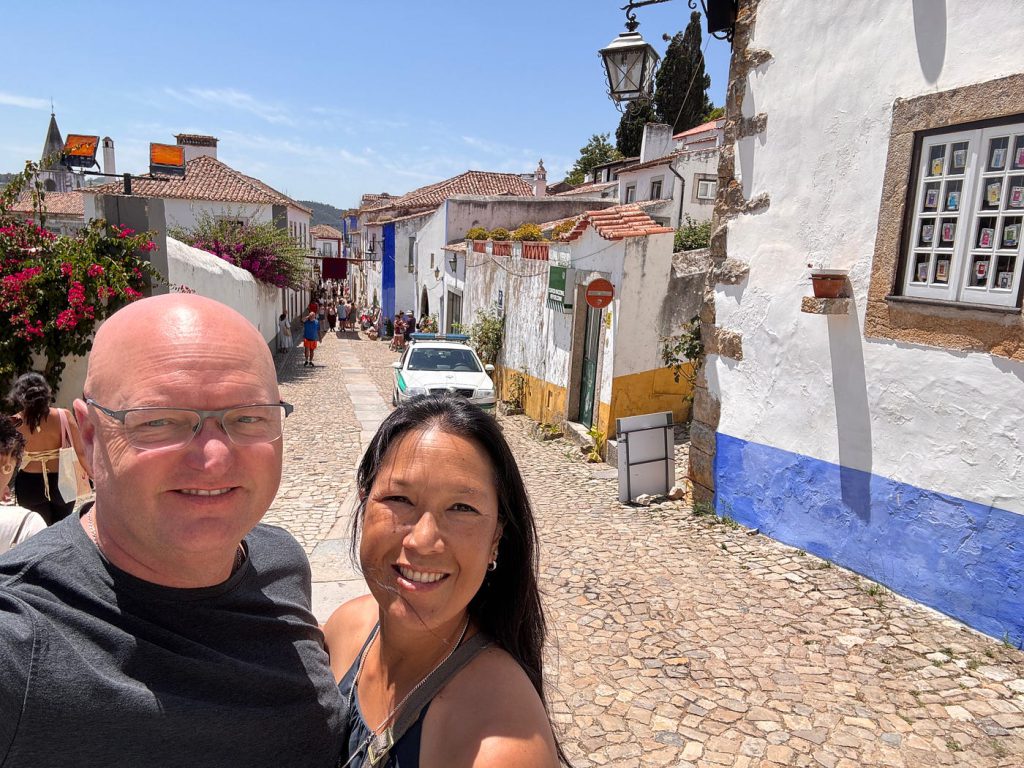
Yet as the wedding drew near, the emotions began to well up. There is something about anticipation that can intensify grief. You know a meaningful day is coming. You know there will be beauty in it. You also know there will be moments that catch you off guard. I could feel both truths moving closer with every passing hour.
The night before the ceremony, I found myself awake in tears. The room was quiet in that particular hotel-at-night kind of way, where every little sound feels amplified. I could hear the low hum of the air, the occasional noise from outside, and my own thoughts refusing to settle down. They were tears of sorrow, yet also tears of joy for Maria and Jack. Tears for what should have been. Tears for what still was. Tears because love does not disappear when someone dies; if anything, it becomes even more visible in moments when their absence is impossible to ignore.
I lay there thinking about Maria and Alaina as young women, about friendship, about how quickly life changes, and about how little control we truly have over the most important things. I thought about what courage looks like. Sometimes courage is standing on a stage and telling your story. Sometimes courage is boarding a plane and choosing to walk into a celebration you know will break your heart a little. Sometimes courage is simply getting dressed the next morning and showing up.
I told myself to take deep breaths and keep moving forward. That’s the thing about resilience: it’s not about avoiding the pain, yet about learning to live alongside it. It’s not pretending you’re okay when you’re not. It’s not stuffing grief into a box and hoping it stays there. Real resilience is making room for sorrow without surrendering your ability to experience joy. It is choosing, again and again, to remain openhearted in a world that has given you every reason to shut down.
The day of the wedding was a whirlwind of European hotel quirks, and honestly, I’m grateful for that because sometimes the absurd details of life keep you grounded when your emotions are threatening to carry you away. We had one of those mornings where simple things became unexpectedly complicated. There was a scramble to get our clothes ironed. There were timing issues, a little confusion, and that low-grade travel stress that seems to show up at the worst possible moment. At one point it felt like the entire success of the day rested on whether a shirt and jacket would somehow become presentable in time.
Of course, the ironing didn’t happen in time.
There’s something almost comical about that now. Here we were, halfway around the world for a deeply meaningful occasion, carrying all this emotional weight, and the practical problem in front of us was wrinkled clothes in a hotel that seemed to operate by its own mysterious set of rules. Life is funny that way. Even on sacred days, there are still elevators to wait on, clothes to fix, keys that don’t work right, and front desks that smile politely while not solving the problem.
We made it to the ceremony just in time, with hearts racing for more than one reason. And then, as often happens, all the little annoyances fell away the moment the real moment began.
Seeing Maria’s mother brought me to muted tears. There are moments when another parent’s joy and grief become visible to you all at once, and this was one of those moments. I felt my wife’s loss as the mother of the bride simultaneously as my own. Weddings carry a special kind of tenderness for parents. There is pride in watching a child step into a new season of life. There is gratitude for the person they have become. There is memory in every glance. And when you have lost a child, there is also the ache of the moments you know you will never have.
I watched Hannah, and I knew she was carrying all of that too. Not loudly. Not dramatically. Just deeply. That’s often how grief lives in a marriage after child loss. Sometimes one of you says exactly what you’re feeling. Other times you don’t need words. You just know. You can see it in each other’s eyes.
The ceremony itself was beautiful, and with beauty came waves of emotion. The setting, the flowers, the gathered family and friends, the significance of everyone having traveled so far to witness this covenant of love, all of it seemed to heighten the sacredness of the moment. There was joy in the air, yet there was also reverence. It felt like everyone understood, in one way or another, that love is precious because life is fragile.
During the service, the officiant mentioned that Alaina was the reason Maria and Jack were together. Just hearing her name made me gulp for air. It was as if time folded in on itself for a second. The wedding was happening in the present, yet Alaina’s spirit and influence were undeniably part of the story being told.
Our son had told us, “Alaina would be sure everyone in the room knew it was her doing that got them together.” He was right.
That line made me smile through tears because it sounded exactly like her. I could picture her with that mix of confidence, charm, and playful insistence, making sure no one missed the fact that she had been instrumental in this love story. And maybe that is one of the most meaningful things grief can teach us: a person’s impact does not end when their life does. Love keeps rippling outward. Influence keeps moving. Relationships formed because of them continue. Stories continue. Joy continues.
In that moment, I wasn’t just grieving what was lost. I was witnessing what remained. Alaina was not there physically, and that absence was real and painful. Yet her fingerprints were still on this day. Her friendship with Maria mattered. Her life mattered. Her love had helped shape a future she did not get to physically stand in, and somehow that was both devastating and beautiful.
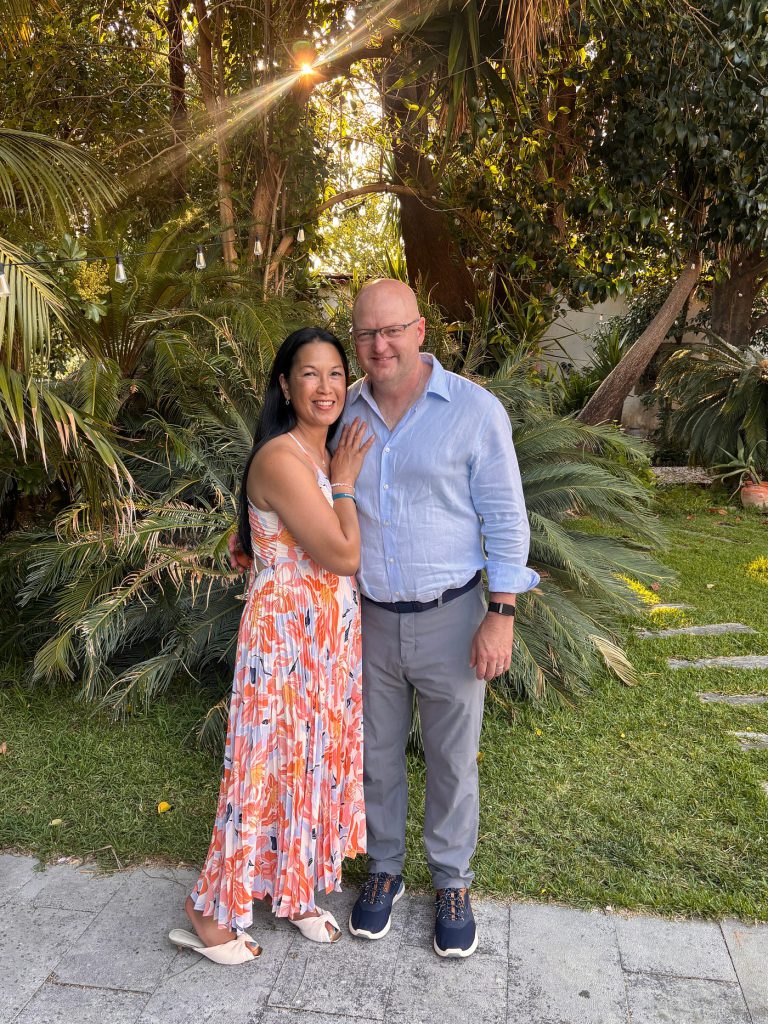
Throughout the evening, I had to step outside and take deep breaths. I’ve learned not to fight those moments. When grief rises up, sometimes the kindest thing you can do for yourself is acknowledge it instead of trying to muscle through. There were parts of the reception where I could feel the room pressing in a little: the music, the laughter, the clinking glasses, the motion of people celebrating a future together. It was beautiful. It was also hard.
So I stepped outside when I needed to. I let the night air meet me. I breathed deeply. I gave myself permission to feel what I felt.
One of the hardest moments was the father-daughter dance. Anyone who has lost a daughter will understand why. There are some experiences that are almost impossible to explain unless you have lived them. Watching another father dance with his daughter on her wedding day is already tender. Watching it when you know that moment will never come for you carries a different kind of weight. It is love, loss, beauty, envy, gratitude, ache, and surrender all tangled together.
During the father-daughter dance, I chose to sit outside and enjoy a glass of vinho verde. That might sound like avoidance to some people. For me, it was wisdom. I knew my limits in that moment. I knew that if I stayed inside, I might not be able to hold myself together, and this day was not about me. It was about honoring Maria and Jack. So I stepped out, held that cool glass in my hand, and sat with the reality of what was stirring in me.
The vinho verde was crisp and cold. The night carried that soft, lingering warmth that still hangs in the air after sunset in places touched by a lot of sun. Somewhere behind me, the music continued. I imagined fathers and daughters swaying. I imagined all the rehearsals and planning and emotion that led up to that dance. And I imagined Alaina.
I imagined what her wedding day might have looked like. What kind of dress she would have chosen. Whether she would have wanted something elegant and timeless or something that reflected her fun, bright personality. I wondered what song we would have danced to. I pictured her smiling, maybe laughing if I got emotional, maybe teasing me a little because that would have been very much in character. That imagined dance will never happen in this life, and there is no way to say that without feeling the blunt edge of it.
Yet even there, sitting outside with a glass of Portuguese wine while my heart was breaking a little, I was reminded of something important: grief is not proof that hope is gone. Grief is proof that love remains. The sorrow is real because the love is real. And if I let myself stay present, not numb, not shut down, I can still find sacredness even in the pain.
The most beautiful and sorrowful moment of the evening may have been realizing Maria didn’t have a Maid of Honor because that role belonged to Alaina.
That landed deeply.
There are absences that shout louder than speeches. No one had to explain it. No one needed to make a grand announcement. The space itself said enough. That place beside Maria, that honorary closeness, that role of standing nearest on one of the biggest days of her life, was still connected to Alaina. In a way, I found that deeply moving. It acknowledged something true. It honored a bond that death did not erase.
And it also hurt.
That is the strange tension of grief after tragedy. The things that comfort you can also undo you. To know Alaina was still being honored was a gift. To know why she was absent was devastating. Both things can be true at once. In fact, when you live with loss long enough, you realize most meaningful moments hold more than one truth.
We cried a lot, yet we felt Alaina’s presence of spirit. Not in some dramatic or theatrical way. Just in those quiet inner nudges, those flashes of memory, those moments when someone says her name and the room feels fuller instead of emptier. We felt her in Maria’s joy. We felt her in the history that brought people together. We felt her in the love that still surrounded us all.
We wouldn’t have missed it for the world.
That matters to say clearly, because sometimes people assume that if something is painful, it would be easier not to go. Sometimes staying home may be the right choice. Yet other times, love calls you to show up even when showing up costs you something emotionally. This was one of those times. We did not go to Portugal because it would be easy. We went because Maria mattered. Because Alaina mattered. Because love and grief are not opposing forces. They are often intertwined.
When we checked out of the hotel, they actually billed us for the ironing they never finished. I didn’t contest it. The irony made me smile.
That little ridiculous ending somehow fit the whole experience. A deeply emotional, sacred, exhausting, beautiful trip capped off by being charged for a task that never got done. If that isn’t a picture of life, I’m not sure what is. You can be grieving and laughing. You can be exhausted and grateful. You can be disappointed by something small while still being profoundly moved by something big. Life is rarely one thing at a time.
And maybe that is part of what choosing to live with tragedy really means.
It means allowing room for the whole human experience. It means not expecting grief to behave neatly or leave quietly. It means understanding that resilience is not a finish line you cross. It is a daily practice of telling the truth about your pain while remaining open to joy. It is learning to notice beauty without feeling guilty for it. It is letting tears come when they need to and still saying yes to the trip, yes to the wedding, yes to the celebration, yes to the life still in front of you.
For me, that journey in Portugal was not just about attending Maria’s wedding. It was another reminder that Alaina’s life continues to matter in the lives she touched. It was a reminder that sorrow and gratitude can sit side by side at the same table. It was a reminder that even after unimaginable loss, we still get invited into moments of beauty. The question is whether we will have the courage to enter them fully.
I am still learning. I suspect I always will be. Each journey with grief is not linear.
If you are navigating your own journey of loss, maybe your version of courage today is much smaller. Maybe it’s getting out of bed. Maybe it’s making the phone call. Maybe it’s attending the event you’re not sure you can handle. Maybe it’s admitting that you are not okay. Maybe it’s letting yourself remember someone you love without rushing past the pain.
Whatever it is, I want to encourage you with this: you do not honor the people you’ve lost by refusing to live. You honor them by carrying their love forward. By showing up. By loving others well. By being present. By choosing, however imperfectly, to live with tragedy rather than in it.
If my writing helped you in a small way with your journey of grief you can see more on arikhousley.com or with my best-selling book Always November: Lessons in Loss, Love and Resilience.