
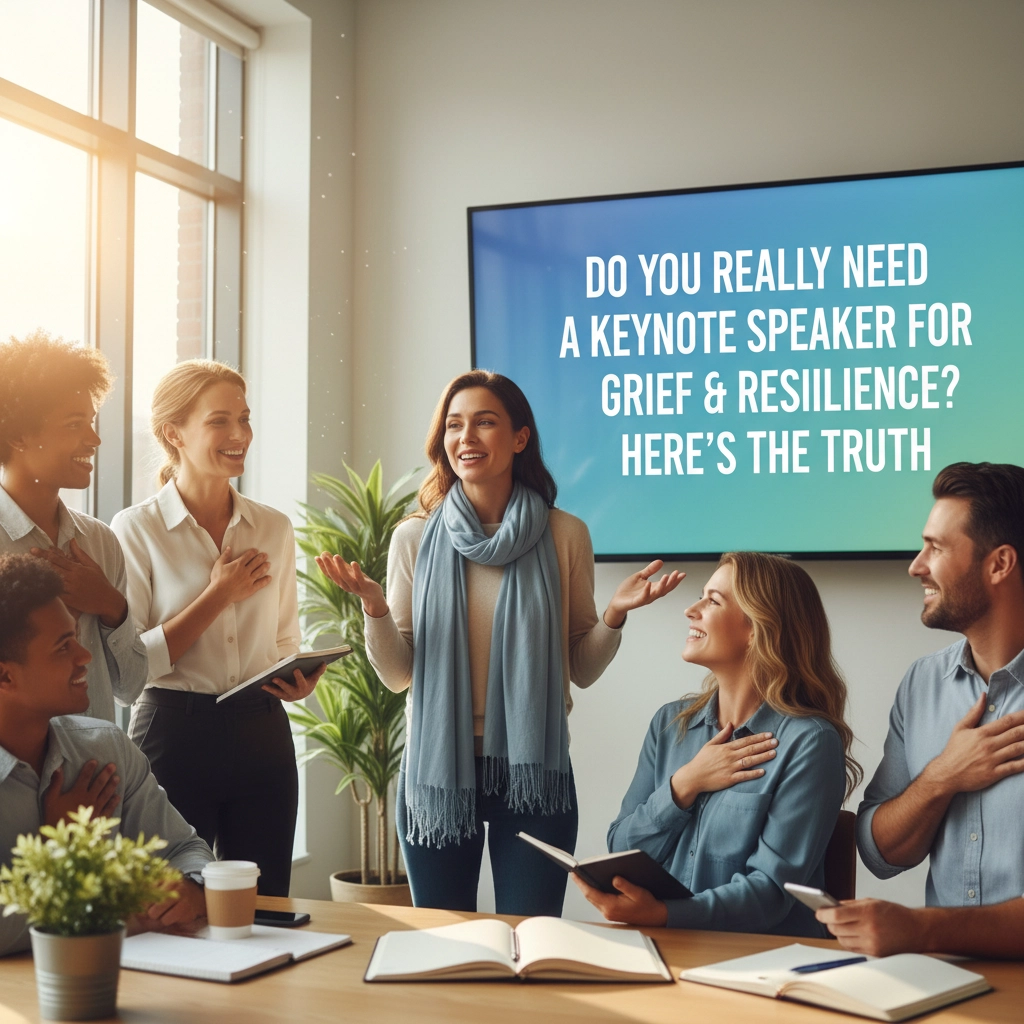
Let me be straight with you. As a category authority and speaker, I get this question more than you’d think. Organizations want to know if bringing in a keynote speaker for grief and resilience topics is actually worth it, or if it’s just another expensive line item that sounds good on paper yet doesn’t deliver real value. Many say, “we don’t need to speak about grief right now!” Unfortunately when it is time to speak about it, you’re already late to the game. So when is the right time to have a speaker on grief and resilience?
The honest answer? It depends. Yet before you roll your eyes and click away, hear me out. There’s a real difference between needing a speaker and benefiting from one, and understanding that difference could save you money and actually help your people.
When You Actually Need One
Most organizations don’t wake up one day and think, “You know what we need? Someone to talk about grief and resilience.” It usually happens after something specific. Maybe you’ve had a workplace tragedy. Perhaps your team has been through layoffs, a difficult merger, or you’re seeing burnout everywhere you look.
In these situations, you’re not just dealing with work stress. You’re dealing with human beings processing loss, change, and uncertainty. Your regular HR training isn’t going to cut it, and pretending everything is fine isn’t helping anyone heal or move forward.

A good grief and resilience speaker becomes essential when:
Your workplace culture has become a place where people feel like they have to hide their struggles. When employees are afraid to mention they’re having a hard time because they think it makes them look weak or uncommitted.
You’re seeing increased absenteeism, decreased productivity, or higher turnover rates that coincide with difficult circumstances. Sometimes people don’t know how to ask for help, yet they’re clearly struggling.
Leadership doesn’t know how to address difficult topics without making things worse. Well-meaning managers who say things like “everything happens for a reason” or “just stay positive” or “trust me, it’ll all be okay” can actually cause more harm than good.
What Actually Happens When You Get the Right Speaker
The best speakers don’t show up with a generic presentation about “bouncing back” and call it a day. They create something different – a space where people feel less alone.
I’ve seen audiences where you could feel the collective exhale when someone finally acknowledged what everyone was thinking yet nobody was saying. When a speaker shares their own story of loss and recovery authentically, it gives people permission to acknowledge their own struggles without shame.
The really effective speakers do three things well. First, they normalize the grief process. They help people know grief is a different journey for all of us. They help people understand that feeling overwhelmed, angry, or lost after difficult experiences isn’t a character flaw – it’s human. Second, they provide practical tools. Not platitudes about positive thinking, yet actual strategies for managing difficult emotions and moving forward. Third, they model what resilience actually looks like, which is messier and more complicated than most people think.
What Your Audience Needs
Most people dealing with grief and building resilience need three things: validation, tools, and hope. They need someone to acknowledge that what they’re going through is real and difficult. They need practical strategies they can use when they’re having a tough day. And they need to believe that healing and growth are possible, even if they can’t see it right now.
Your audience doesn’t need someone to fix them or tell them how to feel. They need guidance on how to navigate an experience that nobody really prepares us for. They need to understand that resilience isn’t about being strong all the time – it’s about learning how to bend without breaking.

The most powerful sessions happen when people realize they’re not alone in their struggles. When someone in the room thinks, “Oh, I’m not the only one who felt angry about that” or “I didn’t know it was normal to feel scared about moving forward.” That recognition creates connection, and connection is often the first step toward healing.
When You Don’t Need a Speaker
Sometimes organizations think they need a grief and resilience speaker when what they actually need is better policies, more supportive management training, or structural changes in how they handle difficult situations.
If your workplace culture is fundamentally unsupportive, bringing in a speaker for a one-hour session isn’t going to solve the problem. It might even make things worse if people feel encouraged to be vulnerable and then face consequences for it later.
You also don’t need a speaker if you’re just checking a box for employee wellness initiatives. Grief and resilience topics require genuine commitment to creating lasting change, not just a one-time event that looks good in your annual report.
Making the Investment Count
If you do decide to bring in a speaker, make sure you’re setting them up for success. A good speaker will want to know about your audience, what they’ve been through, and what kind of support they have available after the session.
Think about what you want to achieve beyond the immediate presentation. Are you prepared to have ongoing conversations about these topics? Do your managers know how to support employees who might be struggling after hearing difficult content? Are your people knowing the difference in communicating with empathy rather than sympathy?

The best outcomes happen when the speaker is part of a larger commitment to supporting your people through difficult times. The session becomes a starting point for deeper work, not a standalone solution.
The Real Question
Here’s what it comes down to: Do you really need a keynote speaker for grief and resilience? Maybe not. Yet do your people need support navigating loss, change, and adversity? Absolutely.
The right speaker can provide that support in a way that’s hard to replicate through other means. They can say things that need to be said, model vulnerability that gives others permission to be human, and provide tools that actually work.
The wrong speaker can waste your money and potentially cause harm. So if you’re going to invest in this kind of presentation, do your homework. Talk to the speaker about your specific situation. Ask how they handle difficult topics responsibly. Make sure they understand that your audience isn’t there for entertainment – they’re there because they need help. There are plenty of great speakers out there, I might not be the right fit for your company or community, or I might be a perfect fit that is for you to decide.
Your people are dealing with grief and building resilience whether you acknowledge it or not. The question isn’t whether these topics exist in your workplace – they do. The question is whether you’re going to provide support for the very human process of working through difficult experiences, or pretend they don’t affect your organization.
Sometimes that support comes from a skilled speaker who can create space for healing and growth. Sometimes it comes from other resources and changes in how you do business. Yet ignoring it altogether? That’s never the right answer.
Check out my podcasts, contact information and other blogs at arikhousley.com.