
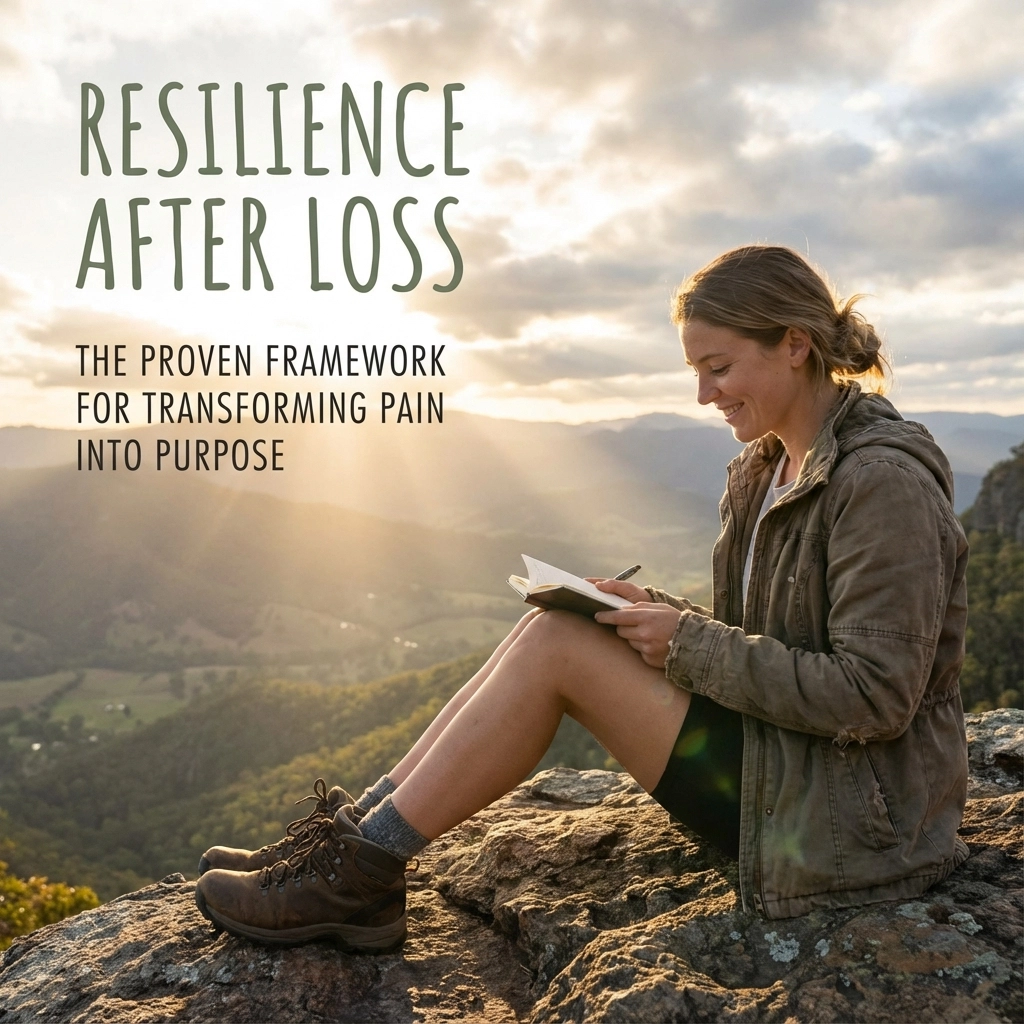
When Dr. Lucy Hone lost her 12-year-old daughter Abi in a car accident, she faced a choice that would define her path forward. As a resilience researcher, she could have let grief consume her: yet she chose to apply everything she knew about bouncing back from trauma to her own devastating loss.
What emerged was a framework that’s helping thousands transform their pain into purpose. And it’s not what you’d expect from traditional grief counseling.
Why Traditional Grief Models Fall Short
Most of us grew up hearing about the “five stages of grief”: denial, anger, bargaining, depression, acceptance. Yet this model, developed in the 1960s, was never actually meant for grieving people. It was designed for terminally ill patients facing their own death.
The problem? When we don’t follow these neat stages, we think we’re doing grief “wrong.” We feel broken when anger resurfaces months later, or guilty when we find moments of joy amid our pain. In fact, I went to therapy to understand, as I didn’t see any one of those 5 stages and wanted to know if I would re-enter the stages of grief at a later date.
Resilient grieving flips this script entirely. Instead of passive acceptance, it offers active engagement with loss.
The Three Core Strategies
1. Shift Your Perspective on Suffering
Instead of asking “Why me?” when tragedy strikes, resilient grieving teaches us to ask “Why not me?” This isn’t about dismissing our pain: it’s about recognizing that suffering is part of the human experience, not a personal failing.
Think about it: Bad things happen to good people every day. When we accept this reality, we stop wasting energy on the injustice and start channeling it toward healing.
I remember feeling relief when I was informed Alaina was the only Pepperdine student still missing, as I didn’t want other parents to be feeling the same agony.
2. Hunt for the Good
Even in our darkest moments, there are still things worth noticing. Maybe it’s the friend who shows up with coffee without being asked. The coworker who quietly takes on extra tasks. The sunrise that still happens despite everything.
This isn’t toxic positivity: it’s strategic attention. We’re training our brains to notice what’s working alongside what’s broken.
3. Ask “Is What I’m Doing Right Now Helping or Harming Me?”
This simple question becomes a compass for decision-making during grief. Should you take that second bottle of wine to bed? Probably not helping. Call a supportive friend instead? Likely helping.
It’s about creating agency in a situation where we often feel powerless.
Making It Work in Real Life
Sarah, a marketing director who lost her husband suddenly, used these strategies to navigate both personal grief and workplace challenges. When colleagues avoided her or offered awkward platitudes, she chose to focus on the few who genuinely showed up. She also made clear decisions about what supported her healing: saying no to work events that felt overwhelming yet yes to projects that gave her purpose.
The result? She didn’t “get over” her loss: she learned to carry it differently. We don’t “move on”, we “move forward”!

For Workplaces: Creating Grief-Informed Environments
Organizations can support resilience after loss by:
- Normalizing grief conversations instead of treating them as taboo
- Offering flexible support that doesn’t assume everyone grieves the same way
- Training managers to ask “Can we support you by having dinner delivered?” rather than making assumptions. Open-ended questions during grief is hard for the grieving person to know how/what to respond. Be specific.
- Recognizing growth that can emerge from difficult experiences
The Purpose Connection
Here’s what’s powerful about this framework: it doesn’t promise to eliminate pain. Instead, it shows us how pain can become a doorway to deeper meaning.
When we actively engage with our grief using these strategies, something unexpected happens. We discover strength we didn’t know we had. We develop compassion we couldn’t access before. We find purpose in helping others navigate similar struggles.
This is how keynote speakers are born from tragedy. How grief support groups emerge from personal loss. How workplace policies change because someone spoke up about their experience.
Your Next Step
Start with just one strategy. Notice when you’re asking “Why me?” and try shifting to acceptance of life’s universal challenges. Look for one small thing to appreciate today. Ask yourself if your next choice will help or harm your healing.
Your loss may have changed everything: yet it doesn’t have to define everything. There’s still purpose waiting to be discovered, even in the midst of pain.
Check out my podcasts, contact information and other blogs at arikhousley.com. Or you can get a copy of my bestselling book Always November: Lessons in Loss, Love and Resilience.